
The Hardware Acceleration Market was estimated at USD 6.5 billion in 2024, and forecasts indicate a robust 22.4% CAGR from 2026-2033, with the market expected to reach USD 40.08 Billion by 2033.
The hardware acceleration market is rapidly evolving in response to surging demand for high-performance computing across AI, cloud, and edge environments, driven by widespread adoption of machine learning, big data analytics, and advanced inference workloads. Today’s landscape is dominated by GPUs, FPGAs, and ASIC-based accelerators, as well as emerging neural processing units (NPUs) and tensor processing units (TPUs), all of which offer significant gains in speed, power efficiency, and compute density compared to general-purpose CPUs. Key drivers of this growth include the proliferation of AI-driven applications, the rise of 5G-enabled edge computing, and escalating needs for real-time data processing in sectors like automotive, telecommunications, and healthcare.
At the same time, the market faces challenges such as high initial development costs, fragmentation of hardware platforms, programming complexity, and thermal management. However, there is a wealth of opportunity in custom silicon design, low-power inference chips for edge devices, and specialized accelerators for large language models and other AI workloads. Looking forward, as design tools mature and economies of scale improve, hardware acceleration is expected to expand even more strongly, unlocking new use cases in next-generation compute, smart infrastructure, and energy-efficient data centers. It provides detailed segmentation insights, a comprehensive competitive assessment, and a forward-looking forecast spanning 2026 to 2034, equipping businesses, investors, and decision-makers with actionable intelligence for strategic planning.
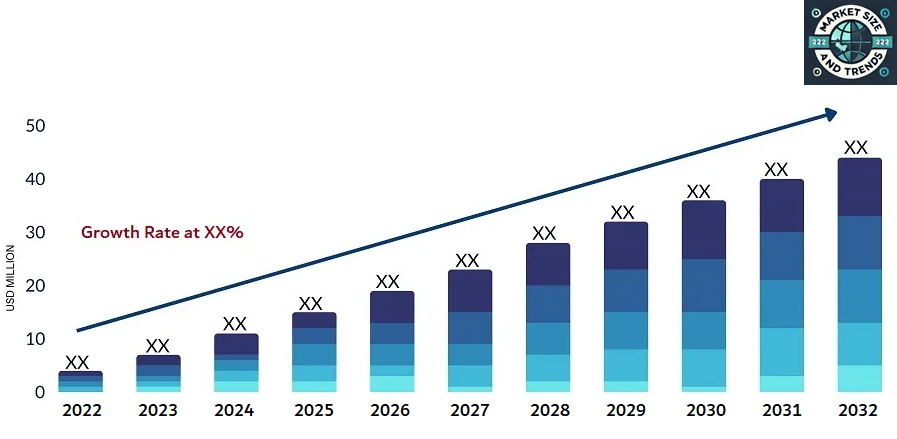
The Global hardware acceleration market has seen substantial growth over the past decade, driven by advancements in technology, changing consumer preferences, and an increasing emphasis on sustainable practices. This report provides a comprehensive analysis of the market, offering insights into its current state, future growth prospects, and key trends that are shaping the industry. As industries across the globe continue to innovate and evolve, the hardware acceleration market is no exception. This report delves into the factors driving market expansion, including technological innovations, regulatory influences, and economic developments. The analysis covers various market segments, competitive landscapes, and regional dynamics, providing a holistic view of the market.
Graphics Processing Units (GPUs) dominate the hardware acceleration market due to their exceptional parallel processing capabilities, making them indispensable for deep learning training, high-performance computing, and advanced graphics workloads. As AI models grow in size and complexity, the demand for GPUs continues to rise in both cloud and on-premise environments, driven by their scalability, broad ecosystem support, and ability to accelerate compute-intensive tasks efficiently. Video Processing Units (VPUs) and AI accelerators are experiencing rapid adoption across a variety of applications. VPUs excel in real-time video analytics, autonomous systems, robotics, and edge computing due to their low-power consumption and optimized visual processing capabilities.
AI accelerators, including TPUs, NPUs, and custom ASICs, are increasingly deployed for neural network inference and specialized machine learning tasks, providing superior performance and energy efficiency compared to traditional CPUs and general-purpose GPUs. Regular expression accelerators and cryptographic accelerators cater to specialized computing needs. Regular expression accelerators enhance high-speed text matching, data filtering, and cybersecurity operations, improving throughput for large-scale data processing. Cryptographic accelerators are critical for secure communication, blockchain, and enterprise data protection, enabling fast and energy-efficient encryption and decryption. Together, these accelerator types highlight the growing trend toward heterogeneous computing architectures that balance performance, efficiency, and security across diverse workloads and industries.
This report provides an all-inclusive environment of the analysis for the Global hardware acceleration market. The market estimates provided in the report are the result of in-depth secondary research, primary interviews and in-house expert reviews. These market estimates have been considered by studying the impact of various social, political and economic factors along with the current market dynamics affecting the Global hardware acceleration market growth.
Along with the market overview, which comprises of the market dynamics the chapter includes a Porter's Five Forces analysis which explains the five forces: namely buyers bargaining power, suppliers bargaining power, threat of new entrants, threat of substitutes, and degree of competition in the Global hardware acceleration market. It explains the various participants, such as system integrators, intermediaries and end-users within the ecosystem of the market. The report also focuses on the competitive landscape of the Global hardware acceleration market.
| ATTRIBUTES | REPORT COVERAGE |
|---|---|
| STUDY PERIOD | 2023-2033 |
| BASE YEAR | 2024 |
| FORECAST PERIOD | 2026-2033 |
| HISTORICAL PERIOD | 2023 |
| ESTIMATED PERIOD | 2025 |
| UNIT | VALUE (USD BILLION) |
| KEY COMPANIES PROFILED | NVIDIA Corporation,Intel Corporation,Advanced Micro Devices,Achronix Semiconductor,Oracle Corporation,Xilinx,IBM Corporation,Hewlett Packard Enterprise,Dell,Lenovo Group,Fujitsu,Cisco Systems,VMware,Enyx,HAX,Revvx,AlphaLab Gear,HWTrek,Teradici |
| SEGMENTS COVERED | By Type - Graphics Processing Unit, Video Processing Unit, AI Accelerator, Regular Expression Accelerator, Cryptographic Accelerator By Application - Deep Learning Training, Public Cloud Inference, Enterprise Cloud Inference By Geography - North America, Europe, APAC, Middle East Asia & Rest of World. |
The competitive landscape of the Global hardware acceleration market is characterized by the presence of several key players, ranging from established companies to emerging startups. These companies are focusing on innovation, strategic partnerships, mergers and acquisitions, and geographic expansion to strengthen their market position.
AMD’s acquisition of Xilinx significantly bolstered its FPGA and adaptive-SoC portfolio. Intel sold a 51% stake in its Altera FPGA business to private-equity firm Silver Lake
The Global hardware acceleration market is segmented based on product type, application, end-use industry. Each segment is analyzed in detail to provide insights into market trends, growth drivers, and challenges.
The Global hardware acceleration market is analyzed across various regions, including North America, Europe, Asia-Pacific, Latin America, and the Middle East & Africa. Each region's market dynamics, growth drivers, challenges, and opportunities are explored in detail.
The research methodology is a combination of primary research, secondary research and expert panel reviews. Secondary research includes sources such as press releases company annual reports and research papers related to the industry. Other sources include industry magazines, trade journals, government websites and associations were can also be reviewed for gathering precise data on opportunities for business expansions in Global hardware acceleration market.
“Their collaborative approach ensured the research was spot on, driving our product development to new heights.”


“Their tailored solutions aligned perfectly with our business goals, helping us achieve significant growth in a short period.”


“The customized market insights provided by their team have transformed our business strategies, leading to remarkable results.”


“The research provided was pivotal in our market entry strategy. We gained a competitive edge thanks to their detailed analysis.”





